Focus on these 4 areas
The holiday travel season presents valuable opportunities for hotels to drive bookings, increase guest spend, and build relationships that extend beyond the peak season. A thoughtful strategy can help you maximize revenue at every touchpoint, from engaging upcoming guests to promoting seasonal experiences to generating demand during slower periods. Klaviyo makes it easier to put that strategy into action with automated messaging, AI-powered tools, and personalized guest experiences.
Explore these 4 focus areas to prioritize your marketing efforts, capitalize on seasonal opportunities, and maintain momentum into the new year. Select each dropdown to explore key opportunities and recommended actions for each time period.
1. Keep your attention on upcoming guests
Build upon your always-on content to ensure you have the foundation to support increased traffic and bookings. Once this foundation is in place, update your core content to include a holiday spin.
Time frame: Always-on
Focus: Confirmation email, check-in, upsell, feedback confirmation email firing, pre-visit know-before-you-go, on-site amenity and dining upsells, post-visit thank-yous, feedback requests
2. Sell the seasonal experience
Selling the seasonal experience means focusing on the entire stay by promoting season-specific offerings. These offers give guests more reasons to book during a high-competition season and increase revenue per stay.
Time frame: October-early January
Focus: Seasonal events, dining, spa, VIP packages, and on-site experiences
3. Capture peak-season demand
While you prepare, keep peak-season demand at top of mind. This is the time when bookings and on-site experiences will be at its highest volume.
Time frame: November-December
Focus: BFCM, Travel Tuesday, flash deals, gift cards
4. Drive revenue beyond the peak season
leverage peak-season demand by driving off-season demand.
Time frame: December-February
Focus: Post-holiday getaways, gift card redemption, winback
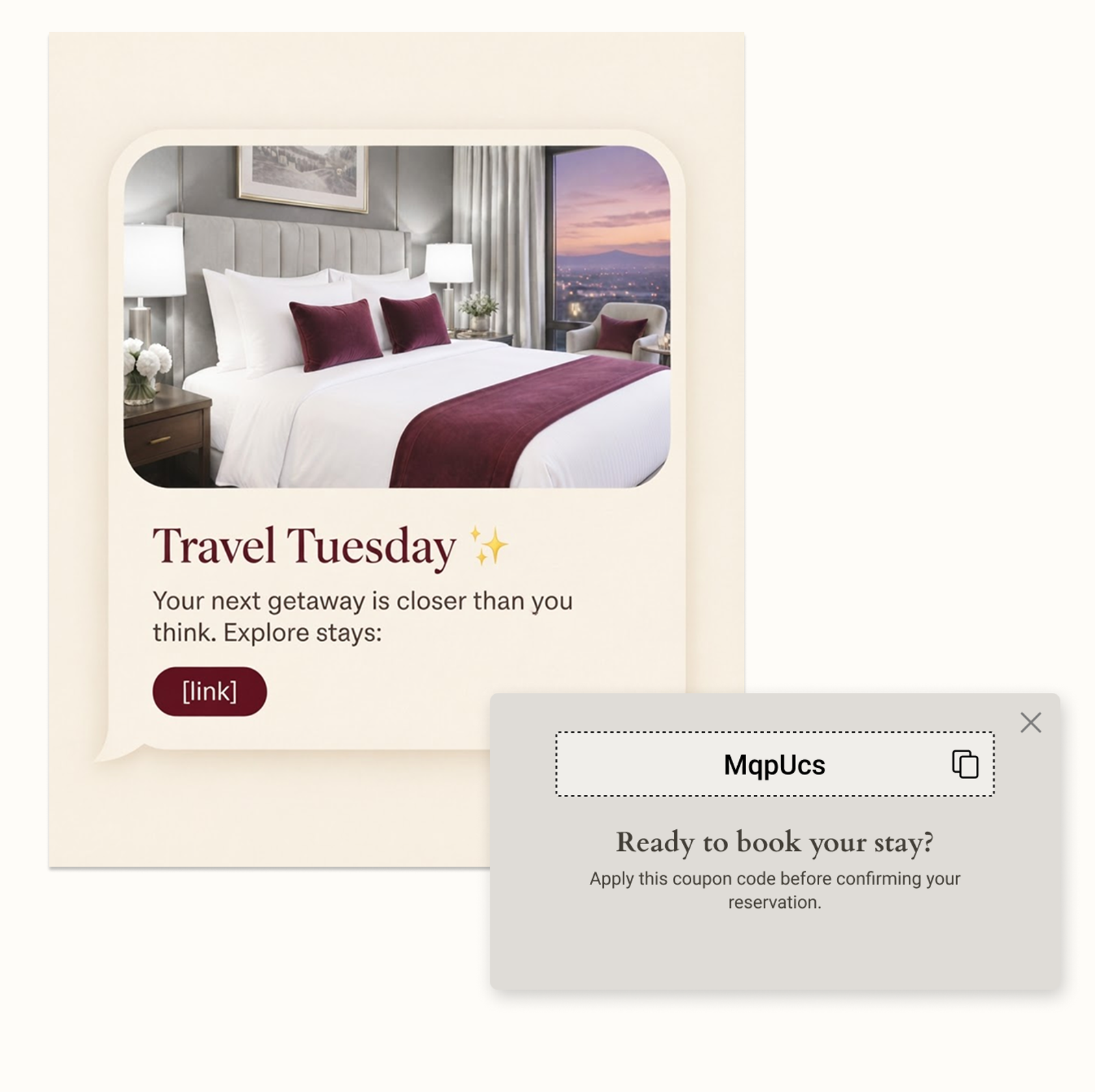
Travel Tuesday
Travel Tuesday falls the day after Cyber Monday and is a key promotional moment for the travel industry. For hotels, its purpose is to capture holiday-season shopping intent and turn it into future bookings after peak season ends.
Take this time to target guests who booked during the same timeframe in previous years, haven’t visited in a while, or are likely to book using an OTA. Take a look at the following goals below to help tailor your messaging.
- Drive future bookings: Use a compelling offer to generate demand for upcoming need periods. Leverage seasonal winback flows to encourage direct booking.
- Create urgency: Limited-time offers encourage travelers to book while the promotion is active. Like BFCM, it runs within a limited 24-hour window, creating urgency for buyers who don’t want to miss out.
- Extend holiday momentum: Turn seasonal shopping behavior into hotel stays and revenue beyond the holidays.
Build your calendar
With your focus areas in place, you can now map them across the holiday season. Your holiday calendar should complement your always-on messaging, while layering in timely campaigns and guest touchpoints to capture seasonal demand. Use this example as a starting point, then tailor the timing and tactics to your property.
Click into each tab below to view each example.
Before beginning messaging, be sure to integrate your PMS data with Klaviyo, which will automatically create guest profiles and help tailor your messaging with guest data.
October
Introduce seasonal messaging while ensuring the guest journey is ready for increased holiday bookings.
- Holiday messaging
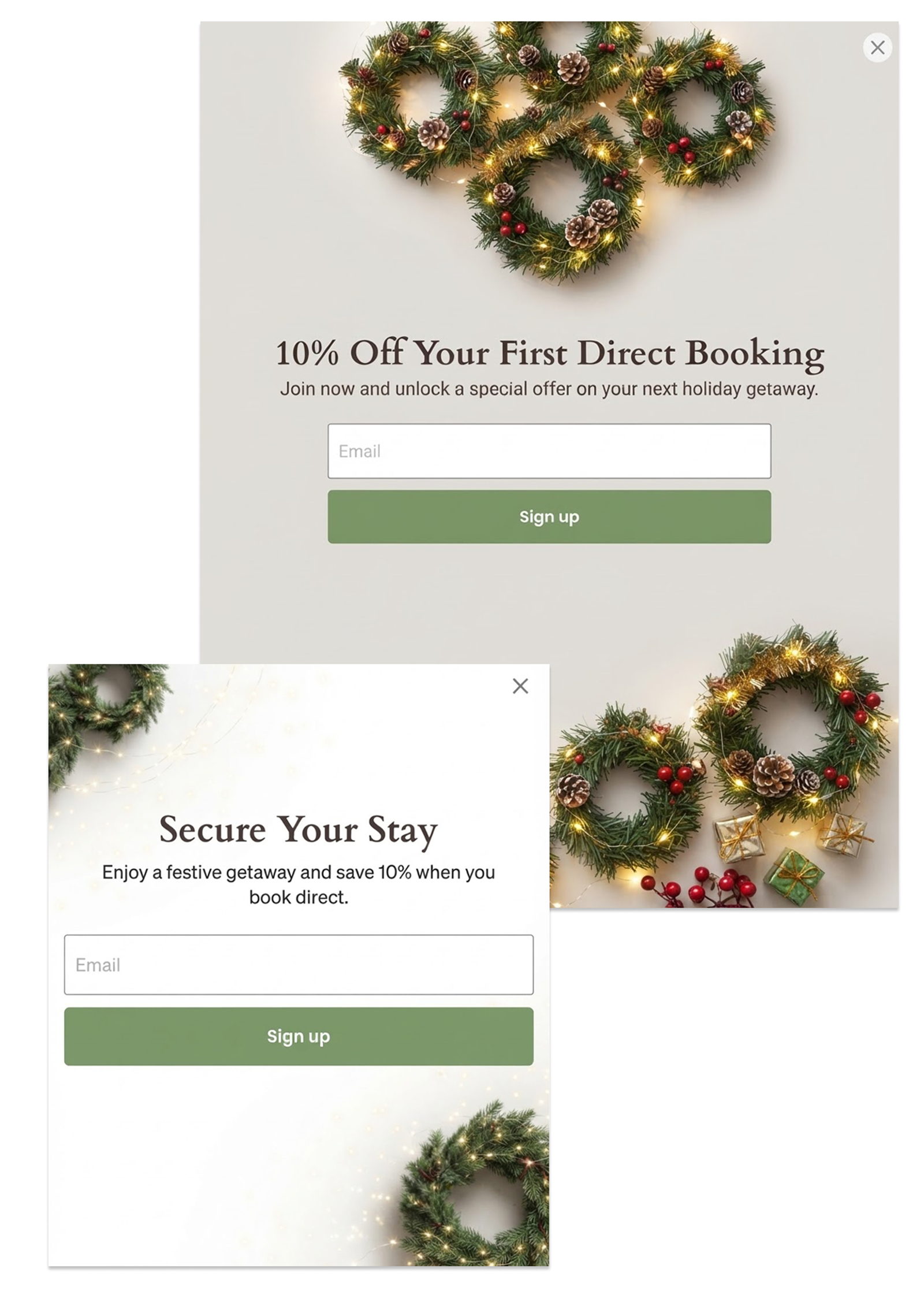
- Create a sign-up form with a holiday-focused CTA to drive bookings. Use these forms to promote seasonal stays and packages for this time period.
- Abandoned Booking Flows
- Reduce friction from browse to checkout. Re-engage potential guests who abandoned their carts by creating an abandoned-booking flow and sharing holiday packages and discounts. Learn more about abandoned booking flows here.
- Your welcome series
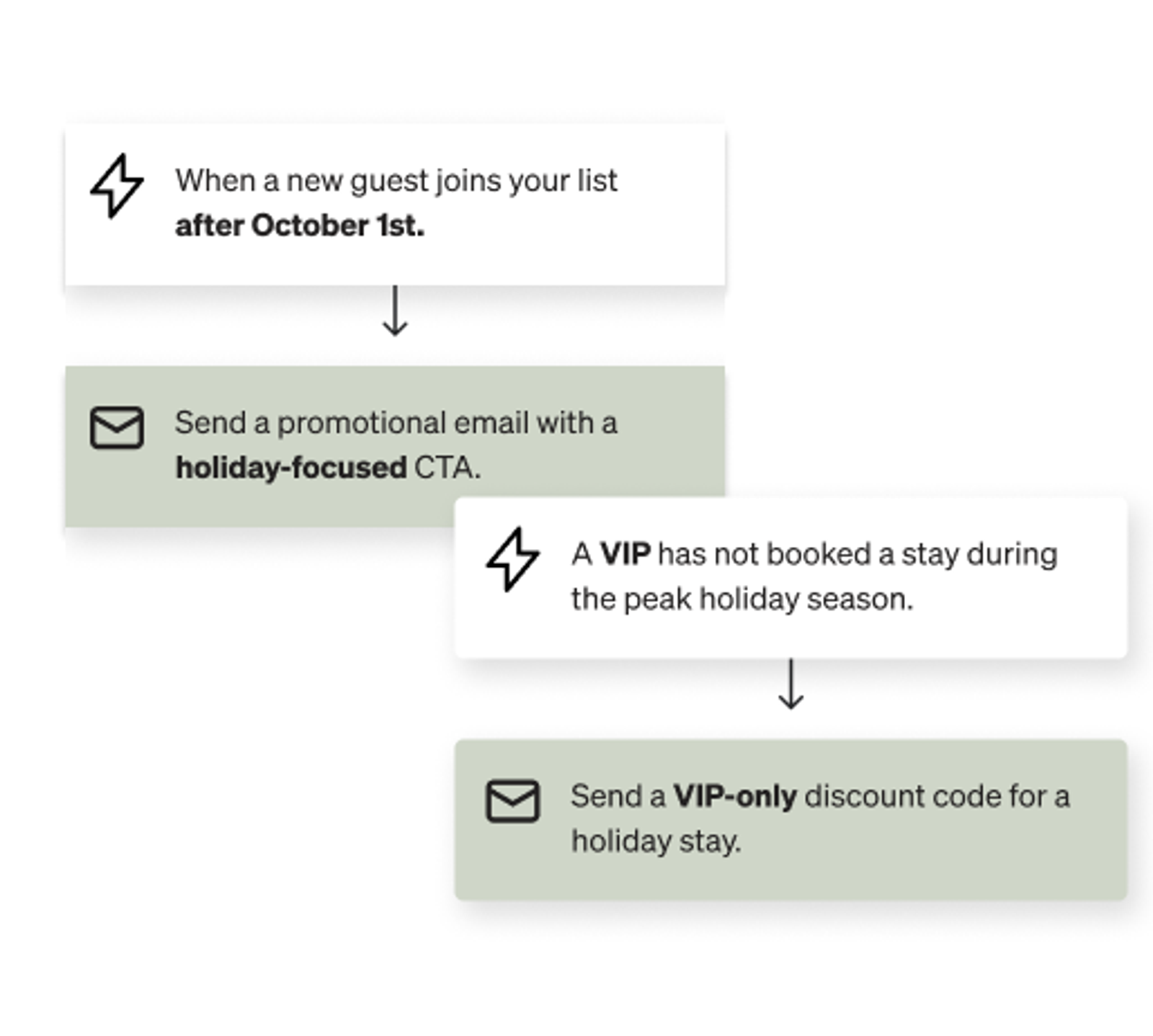
- Bolster your existing welcome series so any guests who subscribe after October 1st will also be pushed holiday packages. This will help drive direct bookings from guests who haven’t yet booked with holiday deals.
- Reservation confirmations
- Add dynamic content tailored to guests’ late-December stay dates. Create a reservation object for guests arriving during the late-December holiday period. Learn more about using objects for hospitality communications here.
November
Now that the peak holiday season is in full swing, continue to focus on upcoming guests and bolster holiday messaging. This is the time to promote seasonal experiences while expanding your acquisition efforts.
- Holiday experiences
- Use segmentation to promote relevant holiday experiences to past guests and local audiences. For loyalty members and VIPs, use personalized messaging and unique coupon codes to create a sense of exclusivity and encourage repeat bookings.
- Holiday gifting
- Push and/or launch email and mobile messaging campaigns that promote specific giftable experiences, including branded merchandise, gift cards, and bonus card offers.
- Travel Tuesday and New Year’s Eve
- For Travel Tuesday, focus on drawing in guests by using incentives to stand out during a competitive time of year. Start promoting New Year’s Eve experiences, such as stays, or dining and events for local audiences.
- Guest upsells
- Layer seasonal experiences into your standard pre-arrival messaging.
December
Continue to focus on upcoming guests, holiday messaging, and peak season acquisition. Turn some of your attention toward driving revenue. This is the time to capture last-minute holiday demand while giving guests an incentive to return after peak season.
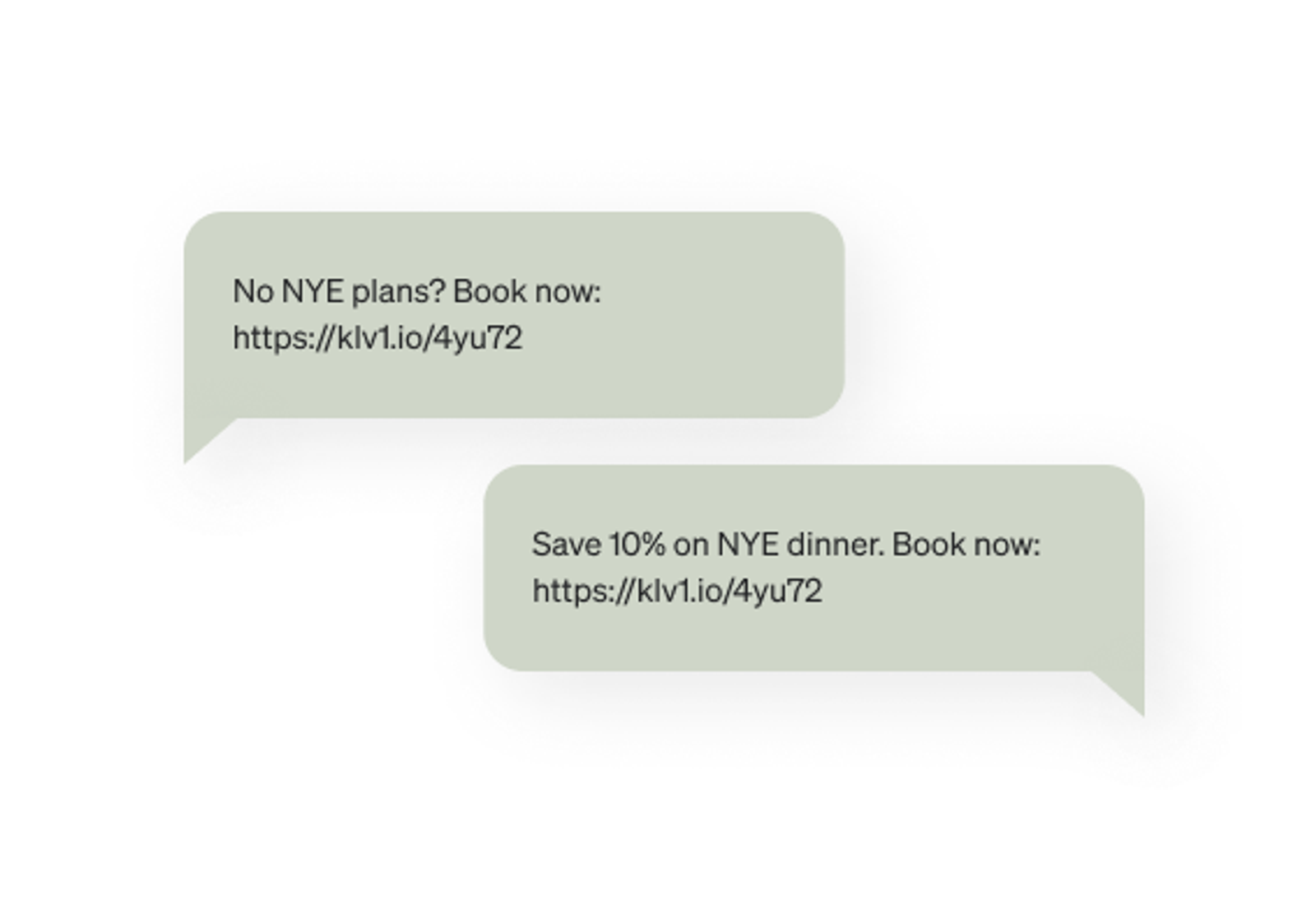
- New Year’s Eve
- Leverage New Year’s Eve events to drive flash deals during peak-season acquisition. This should create a sense of urgency and drive bookings.
- User-generated content (UGC)
- Leverage UGC from your previous guests to build social proof, which is especially effective during peak season times. Pair UGC with promotion for New Year’s Eve, such as previously successful events or sought-out menu items. You can search for, use, and collect consent for UGC through Klaviyo Social Marketing.
- Return incentives
- Promote seasonal offers as a return incentive for past guests.
January and beyond
As always, focus on upcoming guests. Now that peak-season acquisition has hit a lull, you can fully turn your attention to driving revenue beyond peak season. This is the time to re-engage holiday audiences while getting ahead of the next major guest occasions.
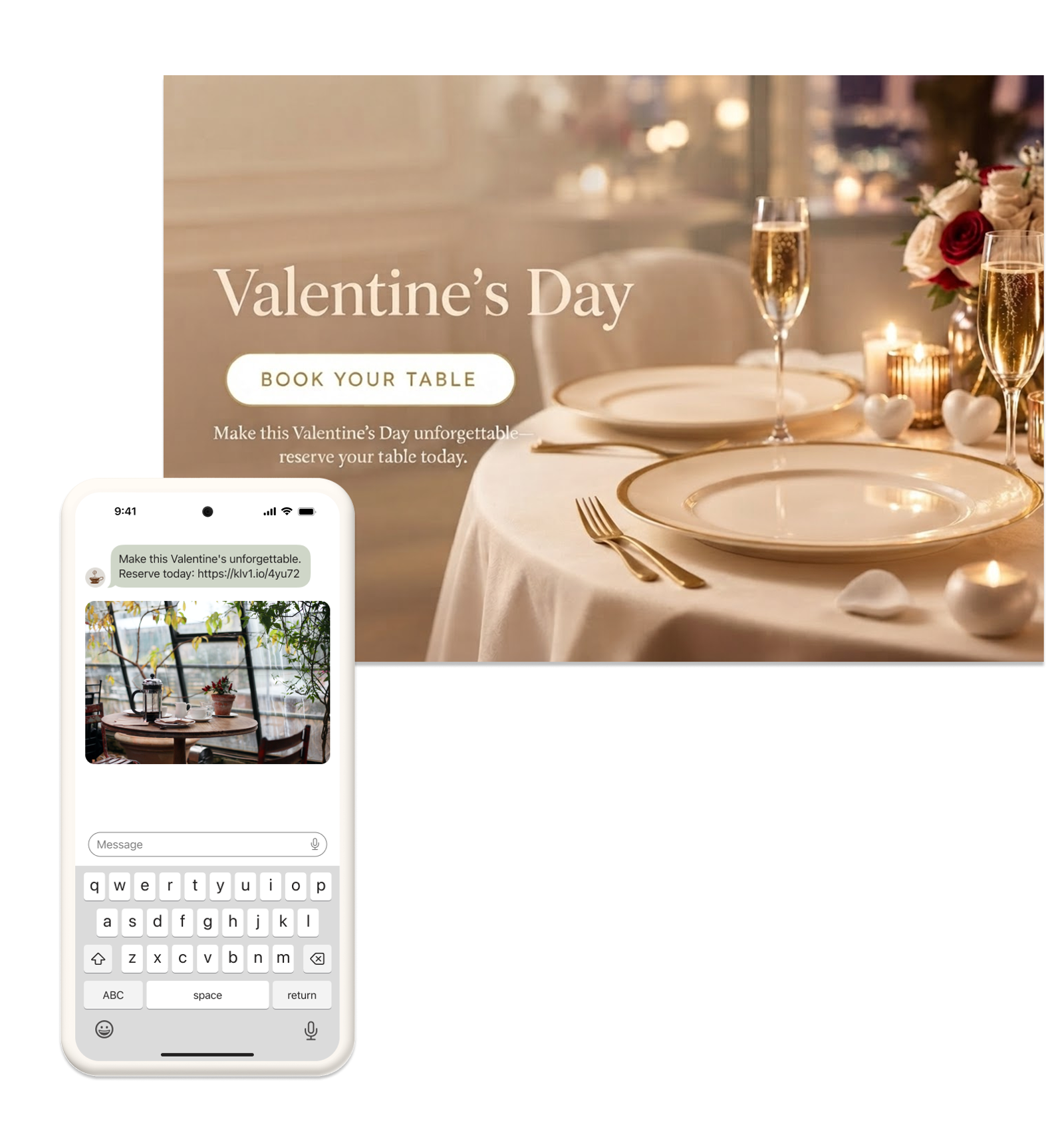
- Valentine’s Day
- Begin an email campaign promoting romantic stays, dining reservations, spa packages, and other Valentine’s experiences.
- Returning guests
- Give recent and first-time guests new reasons to visit again. Encourage gift card redemptions from previous campaigns.
- Need-period demand
- Target past holiday guest segments with offers designed to drive bookings during upcoming need periods.
- Review your campaigns’ performance
- Once the season wraps up, review your Campaign Performance Report in your analytics tools. Use opens, clicks, bounces, unsubscribes, conversions, revenue, and other engagement and deliverability metrics to identify opportunities for improvement next year.
Save time with Klaviyo’s AI-powered tools
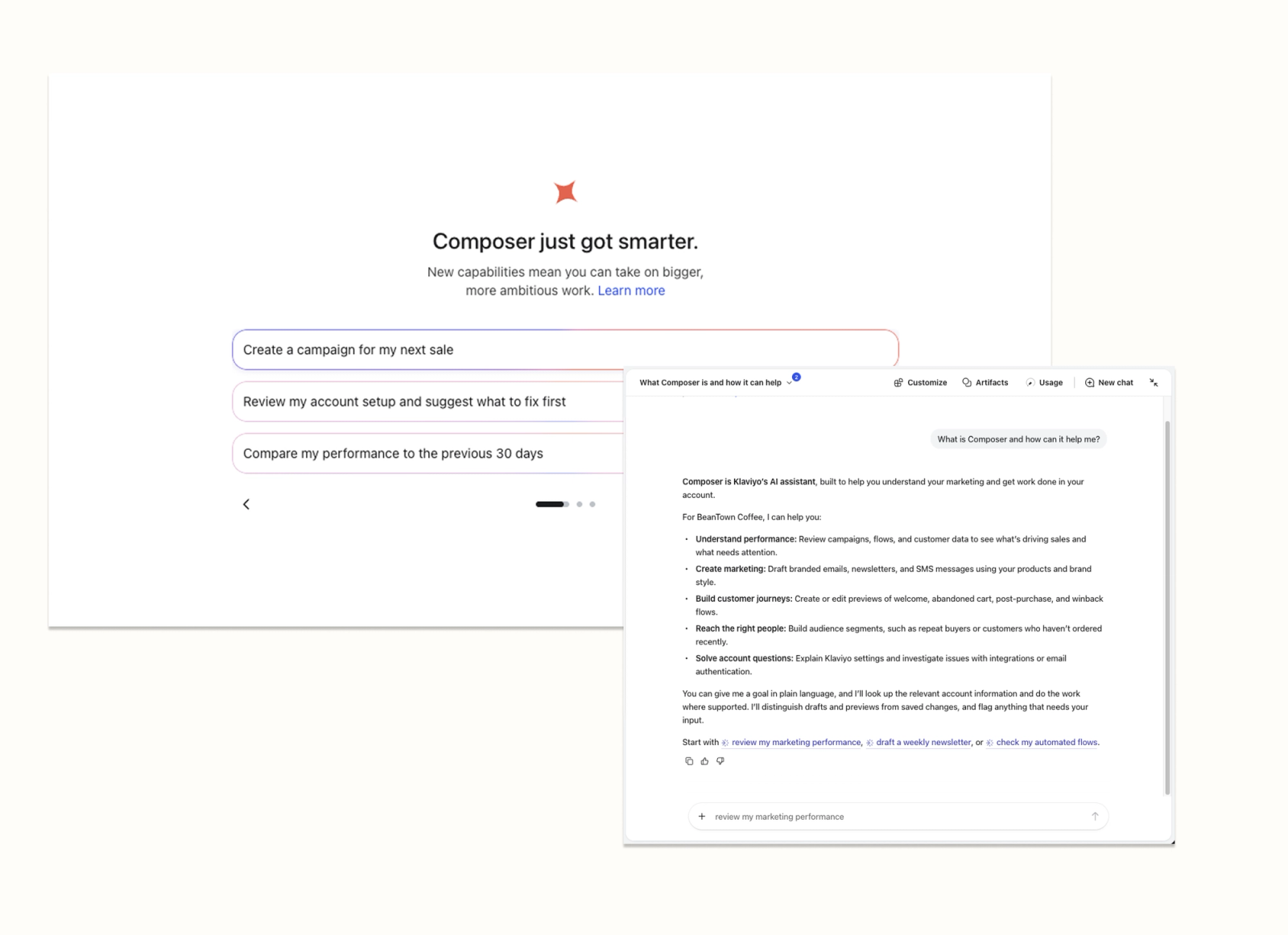
Save time by using Composer to turn your hotel’s seasonal strategy into campaigns for email and text messaging.
Give Composer a clear prompt that includes your goal, audience, offer, timing, and tone. For example, ask it to create a Travel Tuesday campaign for past guests and local audiences promoting January stays. Composer can draft the message and select or create an audience using your account context, then you can review, edit, and approve the campaign before scheduling it. Learn more about creating campaigns in Composer here.