Why monitor your results?
Even small improvements to your email program can compound quickly, but there’s no way to grow if you can’t determine what’s working, what’s not, and what’s missing from your current strategy. That begins with a clear analysis. The sooner you start paying attention to your data, the faster you'll grow.
One of the most important concepts to understand at this stage is deliverability.
- Deliverability: This measures whether or not your emails actually reach your subscribers' inboxes rather than landing in spam or being blocked entirely. Good deliverability means messages get seen. Poor deliverability can undermine your results without you realizing it.
Monitoring key deliverability metrics (such as email opens and related conversions) will help you protect your sender reputation and ensure your messages are reaching people and driving results for your brand.
How to analyze your performance
You can analyze the performance of your marketing content in a few places. Click through the slides below to learn more about each avenue.
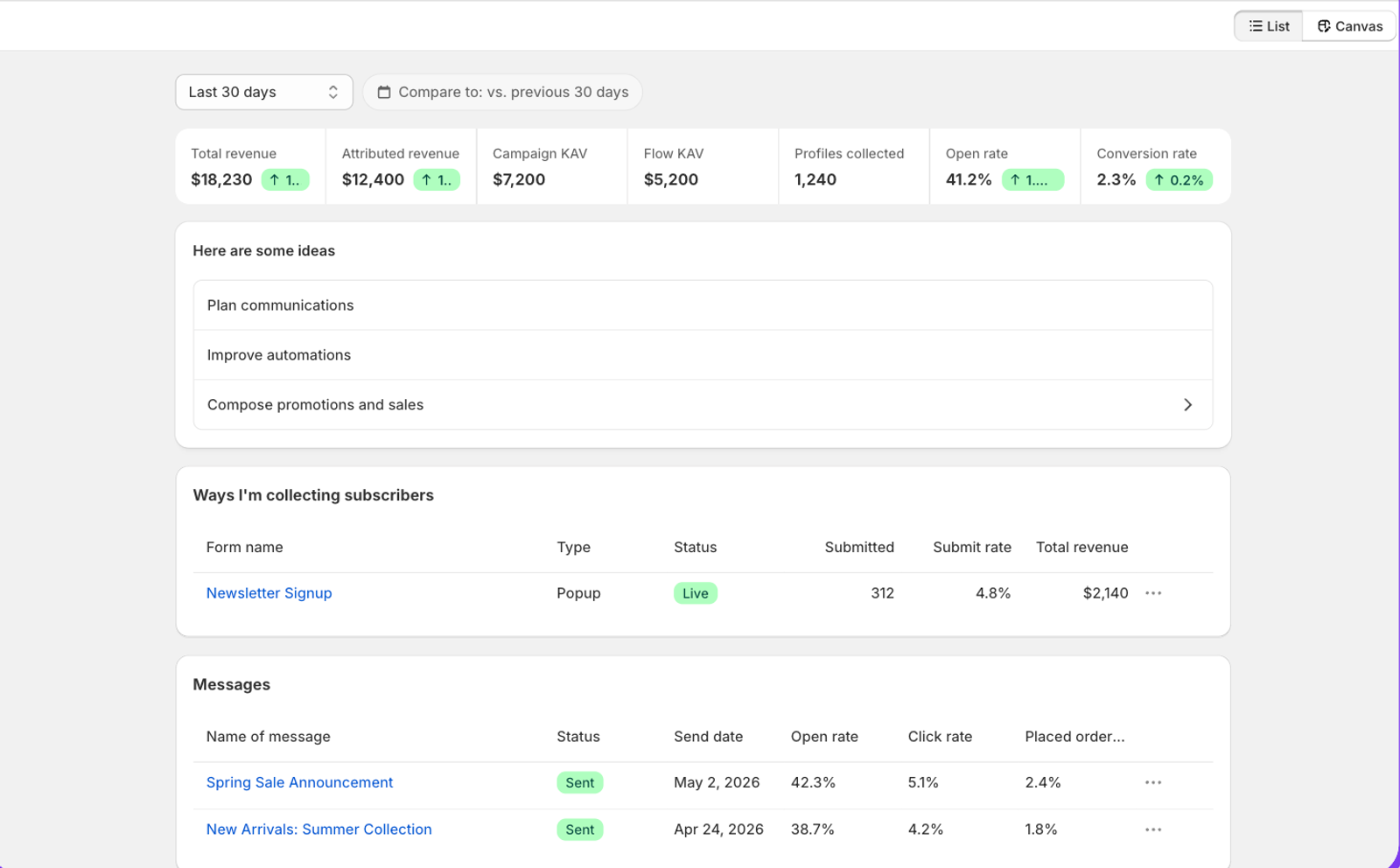
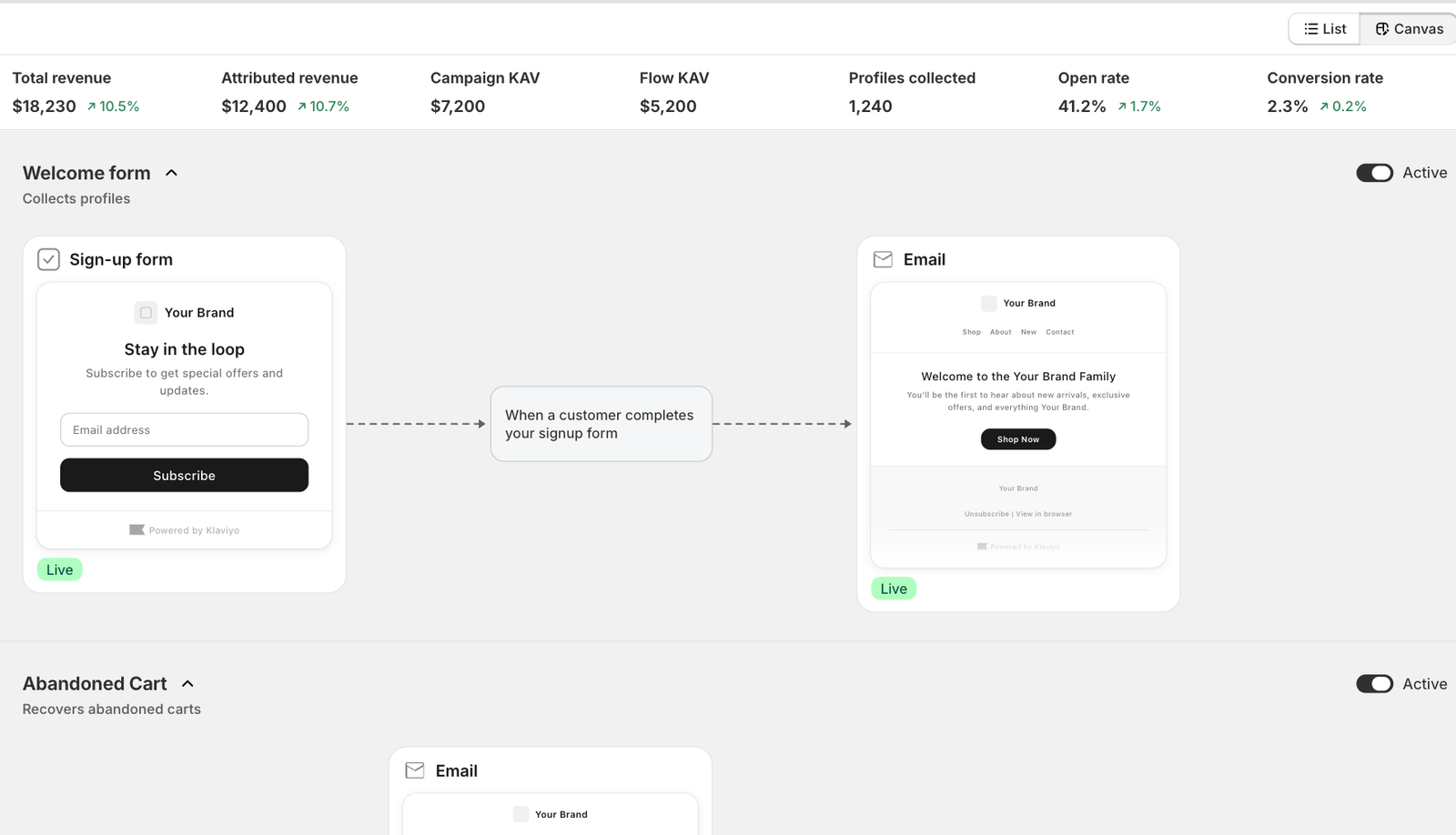
Improve performance across top metrics
Once you can see your data, the next step is knowing what to do with it. Click into the dropdowns below to read through a breakdown of each key metric: what they mean, what “good” looks like, and how to improve if you're falling short.
For a full breakdown of performance benchmarks, head to Klaviyo’s 2026 email benchmarks report and filter by industry. That way, you can set accurate goals for your brand to build towards and determine what “good” looks like.
Total revenue
Definition
Total revenue includes all revenue generated by your brand, syncing from your Shopify Admin. Revenue numbers will vary based on your business’s age, size, industry, and broader market and societal trends.
As you get started growing your brand, set a personal benchmark for the net profit you need to maintain a healthy business strategy.
What to do if you're falling short
- Confirm that your essential automations are live, and adjust the format or content to better speak to your brand or products.
- Check that your sign-up forms are successfully capturing new subscribers.
Attributed revenue (KAV)
Definition
Klaviyo Attributed Value (KAV) is the revenue directly attributed to your emails, either campaigns or flows. It's the broadest measure of Klaviyo Essential's overall impact on your business because it means a subscriber received or opened at least 1 of your emails and then made a purchase.
As you ramp up, focus on reaching a positive trend in KAV (is revenue growing week over week?) rather than an absolute number.
What to do if you're falling short
- Consider launching a one-off promotional campaign to drive immediate purchases from your growing list.
- Test more compelling calls to action or time-limited offers in emails to encourage subscribers to complete a purchase.
Profiles collected (list growth)
Definition
Profiles collected tracks how many new subscribers are joining your marketing list over time. It's a core indicator of audience growth and your future revenue potential; more subscribers means more people to reach with your campaigns, flows, and offers.
Typical benchmarks for success
A conversion rate of 1–5% on sign-up forms is typical for most brands. Early list growth will vary significantly based on your site traffic. Focus on consistent, steady week-over-week growth rather than large absolute numbers right away.
What to do if you're falling short
- Confirm your form is live and not paused in the Klaviyo forms editor.
- Review your form copy and test new CTAs (calls to action), in other words, the text that spurs them to click.
- Test the incentive in your form; consider offering a discount, free shipping, or exclusive content, which can significantly boost sign-ups.
Open rate
Definition
Open rate measures the percentage of delivered emails that recipients opened. It reflects how compelling your subject lines are and whether your emails are landing in the inbox rather than the spam folder, making it one of the clearest early signals of deliverability health.
Typical benchmarks for success
Industry averages typically reach about 30%, depending on your sector. That said, promotional campaign emails can vary based on audience size and the relevance of the offer.
What to do if you're falling short
- Try out new subject lines to find what resonates with your audience.
- Experiment with send times to find when your subscribers are most likely to open.
- Send your campaigns to a more engaged segment in Klaviyo Essentials.
Conversion rate
Definition
Conversion rate measures the percentage of email recipients who took a desired action, such as making a purchase, after receiving your message. It reflects how effectively your content and offers translate into real business outcomes.
Typical benchmarks for success
Email conversion rates typically range from 1–5% for ecommerce brands. Highly personalized flows like abandoned cart emails can reach 5–10%, since they target subscribers who have already shown purchase intent.
What to do if you're falling short
- Review your call-to-action copy and button placement to ensure the next step is clear and compelling.
- Ensure the landing pages your emails link to match the promise of your email content.
- Test different incentives such as discounts, free shipping, or limited-time offers to create urgency.
What’s next?
You’ve ramped up with automated sends and now know how to analyze their performance. If you’re seeing solid results with your initial automations, it’s time to continue growing with manual campaign sends.
Continue to the next lesson to learn how to send email campaigns to lists or segments of your audience, say for seasonal promotions, brand announcements, sales, product launches, etc.